Impact Story
The Ripple Effect of One Trek: How CAC Brought Safe Water to Chindi, Kenya


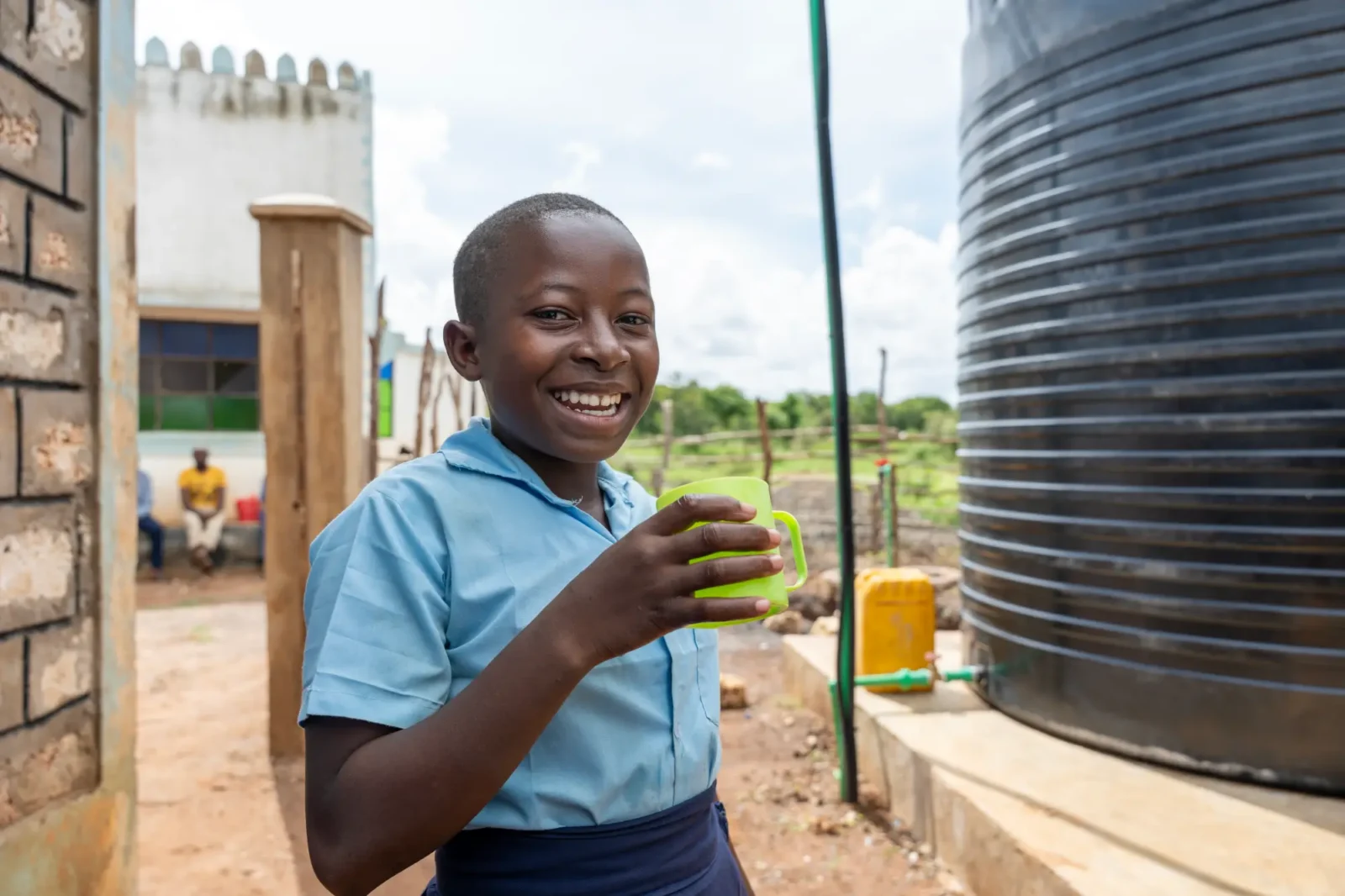
In 2024, CAC participated in a GivePower Trek to Chindi, Kenya, to bring reliable electricity to the community’s primary school and medical dispensary. Seeing that Chindi also lacked safe drinking water, CAC raised funds for a solar-powered water treatment system that now provides up to 6,000 liters of safe drinking water every day for the school, dispensary and wider community.
—
In 2024, CAC went on a Trek to Chindi, Kenya, to help bring reliable electricity to the community’s primary school and medical dispensary.
Located in Kenya’s Kasemeni district near the Tanzanian border, the Chindi community has limited access to many basic public services. The dispensary serves an average of 120 patients each day, while the public primary school educates hundreds of local children.
Both facilities are vital to the community. But while there, CAC saw firsthand that Chindi’s challenges went beyond power: safe drinking water was also out of reach. Students, patients, staff and families have been forced to rely on a nearby well with water that is unsuitable for human consumption and threatens their health.
Inspired by their experience, CAC raised funds to make a new solar-powered water treatment system possible through GivePower’s Solar Impact Project program. Powered entirely by solar energy, the reverse osmosis system pulls in unsafe, contaminated water and transforms it into safe drinking water. Today, the system provides up to 6,000 liters of safe drinking water every day for the school, dispensary and wider Chindi community.
With reliable electricity and safe water now available, these vital community spaces are able to better support education, health and opportunity for years to come.
For girls in particular, that shift can be life-changing. Around the world, girls ages 5–14 spend 160 million more hours each day than boys collecting water, cooking and caring for family members, according to UNICEF. That’s time taken away from learning and opportunity. When safe water is closer to home and classrooms have power, girls gain the time and stability to learn, dream and shape their own futures.
Chindi’s story reflects a need that reaches far beyond one community. Today, 3.6 billion people worldwide face water shortages, a number projected to exceed 5 billion by 2050.
GivePower is working to help meet this need with lasting solutions designed for places the grid doesn’t reach. From Nepal to Colombia, Honduras to Indonesia and across Africa, each GivePower Solar Impact Project is as unique as the community it serves.
Whether powering schools, hospitals, conservancies or food processing centers, these projects are designed with local partners to deliver clean, reliable energy that meets community needs.
What began as one GivePower Trek has grown into a lasting commitment. This is how positive impact grows: through continued action and a willingness to keep showing up.
—
Frequently Asked Questions
What did CAC and GivePower accomplish in Chindi, Kenya?
During a 2024 GivePower Trek to Chindi, Kenya, CAC helped bring reliable electricity to the community’s primary school and medical dispensary. Recognizing that Chindi also lacked safe drinking water, CAC then raised funds for a solar-powered reverse osmosis water treatment system that now produces up to 6,000 liters of safe drinking water each day.
How much safe water does the Chindi system provide?
The solar-powered water treatment system in Chindi provides up to 6,000 liters of safe drinking water every day, serving the local primary school, a medical dispensary that treats an average of 120 patients daily and the wider Chindi community.
What is a GivePower Solar Impact Project?
A GivePower Solar Impact Project delivers clean, reliable solar energy to communities in places the electrical grid doesn’t reach. Each project is designed with local partners around the community’s specific needs and may power schools, hospitals, conservancies or food processing centers.
Where does GivePower operate Solar Impact Projects?
Through its Solar Impact Project program, GivePower has served communities across 32 countries. Each project is developed with local partners around the unique needs of the people it serves.
How can I support GivePower’s work?
Visit GivePower’s website to learn more about GivePower’s Solar Impact Projects and ways to get involved.